

Most people assume mobile fuel truck operations are just a convenience play — a way to skip the pump line. The reality is more significant. A mobile fuel truck operation, known in the industry as on-site or mobile refueling, is a structured commercial service that brings diesel, gasoline, or DEF directly to your equipment, vehicles, or storage tanks at any location. For construction crews, fleet managers, mining operations, and emergency response teams, this model doesn’t just save time. It fundamentally changes how operations stay productive and how fuel costs get controlled.
Table of Contents
- Key Takeaways
- What a mobile fuel truck operation actually is
- Why mobile fueling beats the alternatives
- Industries where mobile refueling operations deliver the most value
- How to set up and engage mobile fuel delivery services
- My perspective on where mobile fueling is headed
- Fuel your operation without the friction
- FAQ
Key Takeaways
| Point | Details |
|---|---|
| Two primary delivery modes | Mobile fuel trucks either fill onsite storage tanks (bulk delivery) or fuel individual vehicles directly via wet-hosing. |
| Major cost savings potential | Companies avoid unauthorized fuel purchases, labor waste, and storage infrastructure by switching to mobile refueling. |
| Technology drives transparency | Digital scheduling and real-time tracking give fleet managers precise visibility into fuel usage per vehicle. |
| Compliance matters upfront | Customers must understand site access requirements, tank compatibility, and applicable fuel regulations before service begins. |
| Wide industry applicability | Construction, logistics, mining, events, and emergency response all gain measurable efficiency from mobile fueling programs. |
What a mobile fuel truck operation actually is
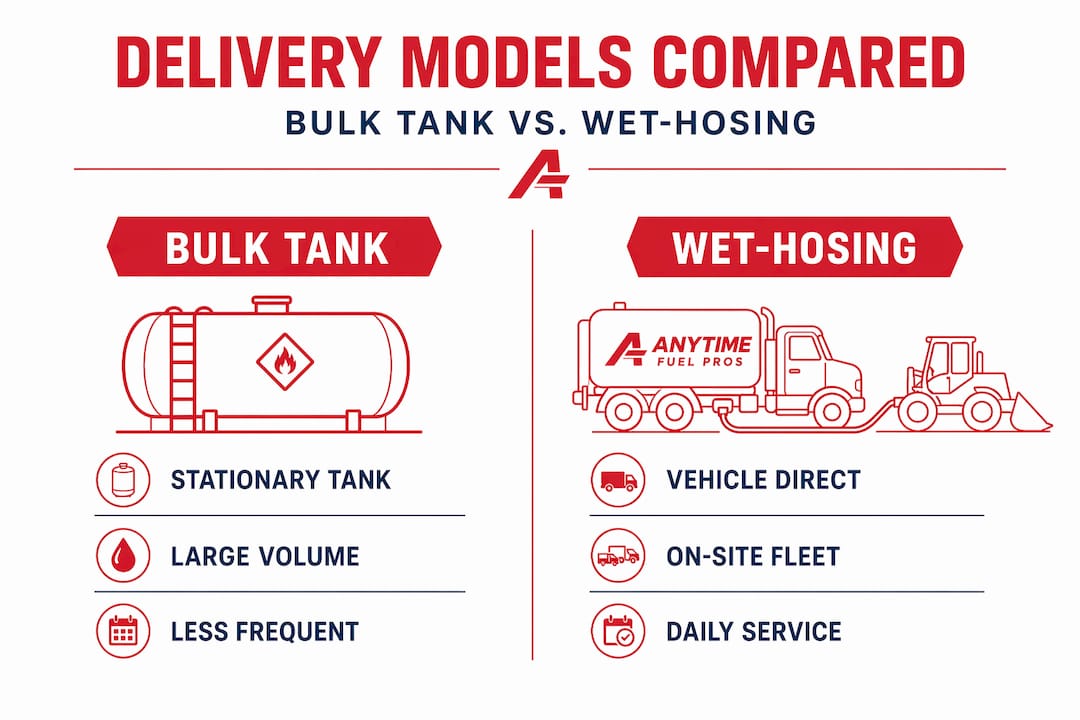
At its core, a mobile fuel truck operation uses a specially outfitted tanker vehicle to deliver fuel directly to wherever it is needed. No retail station. No fixed pump. No detour. The industry term for this service category is on-site refueling or mobile refueling, and it covers two distinct operational models that serve very different customer needs.
The first model is bulk tank delivery. Here, the mobile fuel truck fills a stationary storage tank located at your facility, job site, or equipment yard. Your crew then draws from that tank as needed throughout the day or week. This works well for high-volume operations like mining sites, data centers running backup generators, or large construction projects where dozens of machines need fuel daily.
The second model is wet-hosing, and it operates quite differently. Wet-hosing lets certified technicians fuel individual vehicles or pieces of equipment one by one, right where they sit. No storage tank required on your end. The truck pulls up, connects the hose, and fuels the excavator, dozer, or freight truck directly. This is especially practical for logistics yards and trucking fleets where vehicles are parked overnight.
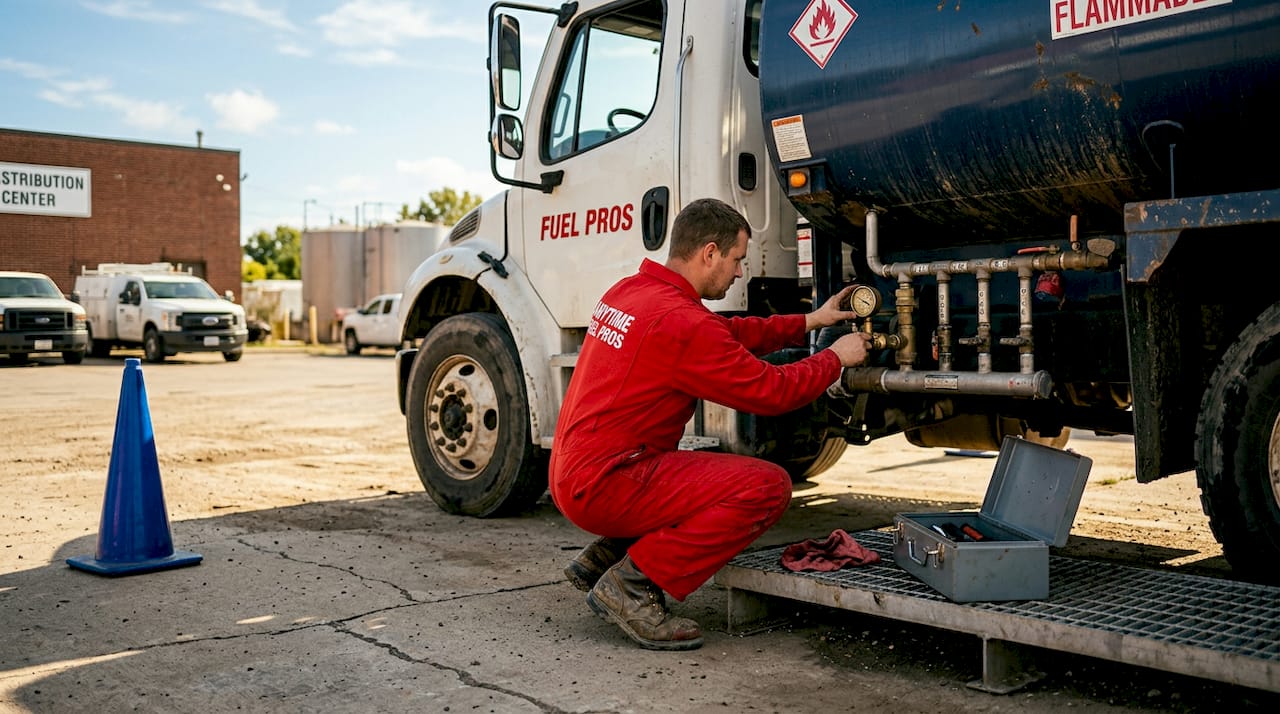
Mobile fuel trucks are purpose-built for these roles. A typical unit carries between 2,500 and 5,000 gallons of fuel in a single or multi-compartment tank, includes a metered fuel pump for accurate dispensing, carries spill containment equipment, and often integrates onboard digital tracking hardware. The driver is trained and certified for hazmat transport, spill response, and safe fueling procedures.
One compliance point worth knowing: regulatory changes have pushed operators away from aging underground tanks, increasing demand for mobile refueling as a cleaner, more flexible alternative to maintaining fixed fuel infrastructure on-site.
Pro Tip: Ask your mobile fuel provider whether they carry both dyed diesel and clear diesel. Many job sites and fleet operations need both, and switching between grades mid-delivery without proper documentation creates compliance headaches.
Why mobile fueling beats the alternatives
The productivity argument for mobile fuel delivery services is straightforward once you run the math. Every time a driver or equipment operator leaves a job site to fuel up, you are paying for transit time, the stop itself, and the return trip. On a construction site with five operators each making a 20-minute round trip to a nearby station, that is over an hour and a half of billable labor burned daily on fuel logistics alone.
Here is how the advantages stack up operationally:
- Labor savings are immediate. On-site fueling eliminates trips to retail stations entirely, returning those hours to productive work. For a fleet of 20 vehicles, this can recover hundreds of hours annually.
- Unauthorized spend disappears. Drivers who stop to fuel at retail stations often add in convenience store purchases, and some operations see quiet fuel theft through overfilling or off-route stops. Mobile fueling eliminates unauthorized purchases and the gray-area spend that surrounds retail stops.
- Equipment uptime stays high. When fuel comes to your machines rather than the other way around, you avoid the scenario where a dozer or generator runs dry mid-shift because no one had time to coordinate a refuel run.
- Digital tracking removes guesswork. Real-time digital reporting ties every gallon dispensed to a specific vehicle or piece of equipment. Fleet managers can pull consumption data by asset, spot anomalies quickly, and build more accurate fuel budgets.
- Infrastructure overhead drops significantly. Companies avoid expensive storage permits and tank maintenance costs by relying on mobile delivery instead of maintaining large fixed storage assets.
The cost argument is not theoretical. The benefits of mobile fuel trucks compound across a season, particularly for project-based industries where margins are tight and every hour of downtime carries a real dollar cost.
Industries where mobile refueling operations deliver the most value
Not every business benefits equally from this model, but the range of industries that do is broader than most people expect. Heavy equipment, logistics fleets, and emergency teams consistently see the greatest gains, and for distinct reasons in each case.
-
Construction and excavation sites run multiple diesel assets simultaneously: excavators, dozers, loaders, compactors, and telehandlers. Coordinating individual fuel runs for all of them is a scheduling nightmare. Mobile refueling lets a single fuel truck handle the entire fleet before the first shift begins, keeping workflow sequencing tight.
-
Logistics and trucking operations benefit most from overnight wet-hosing. Trucks return to the yard in the evening, and a mobile fuel provider services the entire fleet while drivers sleep. Every truck departs the next morning with a full tank, zero driver time spent fueling, and a clean digital record of what was dispensed.
-
Emergency response and disaster recovery scenarios are where mobile refueling operations prove their real value under pressure. During hurricanes, wildfires, or extended power outages, retail stations quickly run out of fuel or become inaccessible. A mobile fuel partner with 24/7 response capability keeps generators, emergency vehicles, and response equipment running when the grid is down and the supply chain is strained.
-
Mining operations and remote project sites often sit far outside the range of any retail infrastructure. Mobile fueling for remote locations solves a problem that has no other practical answer. Bulk delivery to on-site tanks keeps heavy equipment productive without requiring drivers to navigate rough terrain to reach a distant fuel point.
-
Data centers and critical infrastructure require generator fueling on a scheduled, reliable basis. Missing a scheduled top-off is not just an inconvenience. It is a business risk with real SLA consequences.
How to set up and engage mobile fuel delivery services
Starting with a mobile fuel provider is more straightforward than most operations managers expect, but a little preparation on your end makes the process run cleanly from day one.
The table below outlines what to consider based on the two primary service types:
| Consideration | Bulk tank delivery | Wet-hosing |
|---|---|---|
| On-site storage required | Yes, compatible tank needed | No tank required |
| Site access needs | Vehicle access to tank fill point | Access to parked vehicle locations |
| Fuel grade options | Dyed diesel, clear diesel, gasoline | Same, per vehicle requirements |
| Scheduling method | Recurring or on-demand | Typically nightly or shift-based |
| Compliance notes | Tank permits and inspection records needed | Technician certification sufficient |
Once you decide on the service model, the scheduling and preparation process involves communicating site access details, confirming fuel grade requirements, and setting delivery windows. Most providers use app-based or phone-based scheduling, and 24/7 digital scheduling is increasingly standard for commercial accounts.
On the compliance side, understanding what is required before your first delivery saves time and avoids delays. Inspections for fuel truck operations typically cover the vehicle itself (tank integrity, meter calibration, spill kit presence) as well as the receiving site. If you are accepting bulk delivery into an above-ground storage tank, that tank needs to be in compliance with local fire and environmental codes. Wet-hosing at a private yard generally carries fewer site-specific requirements, but your provider should walk you through their safety protocol before the first service.
Pro Tip: Before signing a contract with any mobile fuel provider, ask for their delivery confirmation process. You want a provider who sends a timestamped digital receipt showing gallons delivered, fuel grade, and the asset fueled. Verbal confirmation is not enough for audit trails or budget tracking.
When choosing a provider, prioritize transparent daily pricing, a clear response time commitment for emergency calls, and coverage that matches your operational geography.
My perspective on where mobile fueling is headed
I’ve spent a significant amount of time working around fuel logistics across construction, logistics, and critical infrastructure projects, and the shift I’ve seen in how operators think about fuel is real.
For a long time, fueling was treated as an afterthought. Something that happens between shifts or gets figured out when a machine runs dry. What I’ve learned watching operations scale is that fuel logistics is actually a constraint point. When it fails, everything downstream fails with it.
What actually works, in my experience, is treating mobile refueling the same way you treat any other contracted service: with a documented schedule, a performance expectation, and a data trail. The companies I’ve seen get the most out of mobile fuel programs are the ones that tied fuel delivery data into their equipment utilization tracking. Suddenly they could see fuel burn per asset per shift, catch equipment running inefficiently, and tighten procurement cycles.
The misconception I run into most often is that mobile fueling is only worth it for large operations. That is simply not accurate. A five-truck logistics company spending 45 minutes per driver per day on fuel runs is losing more labor value monthly than the service costs. The math works at nearly every scale above a handful of assets.
The technology layer is where the real gains are coming. Providers who offer transparent, real-time delivery data are going to separate themselves from those who just show up with a truck and hand you a paper receipt.
— Justin
Fuel your operation without the friction
If what you’ve read here describes problems you are already dealing with, whether that is downtime from fuel runs, unauthorized spend, or the scramble to keep generators fueled during an outage, Anytime Fuel Pros has the infrastructure to fix it.
Anytimefuelpros delivers on-site diesel, gasoline, and DEF to job sites, equipment yards, data centers, and event venues across Texas, Utah, and nationwide through a trusted partner network. Scheduled deliveries, 24/7 emergency response, transparent digital invoicing. No surprises.
If you are ready to stop letting fuel logistics slow your operation down, explore diesel delivery options or review the full benefits of delivery to see exactly what fits your situation. You can also place an order now to get started immediately.
FAQ
What is the difference between bulk delivery and wet-hosing?
Bulk delivery fills a stationary storage tank at your site, while wet-hosing fuels vehicles individually without requiring any on-site tank infrastructure. Each model serves different operational setups and compliance requirements.
How does mobile fuel delivery work for a logistics fleet?
A certified fuel technician arrives at your yard during off-hours and fuels each vehicle directly using a metered hose connected to the mobile tanker. Every gallon is tracked digitally and documented per vehicle on a timestamped delivery record.
What inspections are required for fuel truck operations?
Inspections for fuel truck operations typically cover tank integrity, meter calibration, spill containment equipment, and driver hazmat certification. Receiving sites may also need to meet local fire and environmental codes, particularly for above-ground storage tanks.
How much can a business actually save with mobile refueling?
Savings come from recovered labor hours, reduced unauthorized spending, lower fuel theft exposure, and avoided infrastructure costs. For a mid-sized fleet, the combined savings frequently reach thousands of dollars per month.
Is mobile fueling available for emergency or after-hours situations?
Yes. Reputable commercial providers like Anytimefuelpros offer 24/7 emergency response, making mobile refueling especially valuable during power outages, storms, or any scenario where retail fuel supply is disrupted or inaccessible.
Recent Comments