
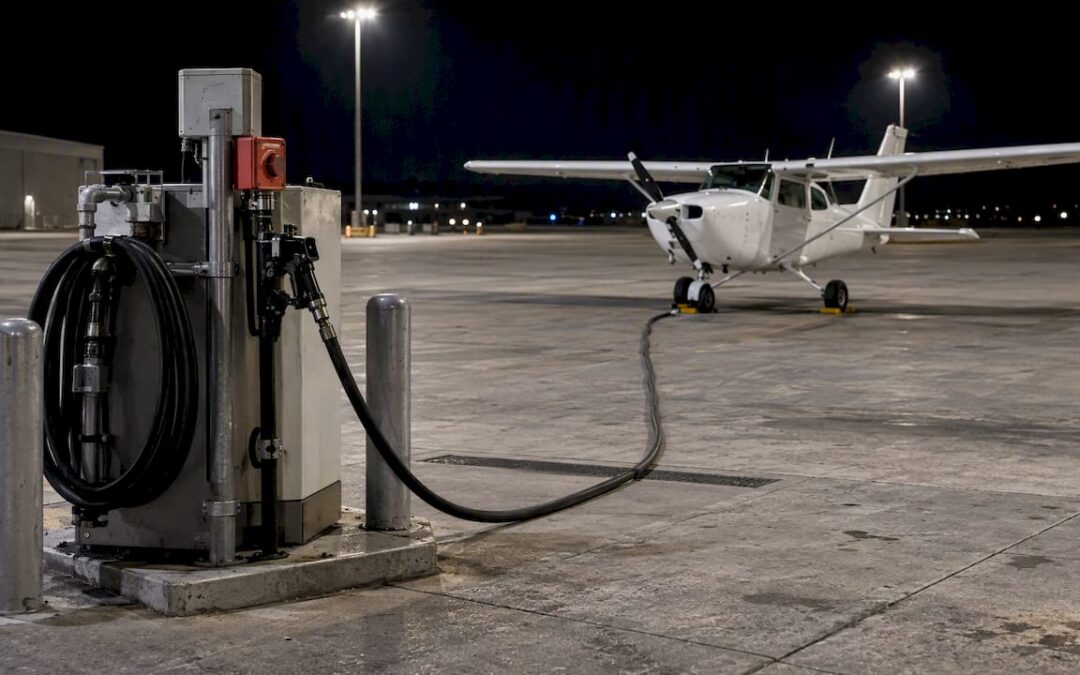
Outside attended hours, options may include arranging attended call-out service with an authorized fueler or following an approved self-service checklist at a field with automated pumps. Either way, engines stay off, the aircraft is bonded, the deadman control stays working, and nobody smokes within 50 feet. Confirm availability before you arrive by calling the FBO and checking the FAA Chart Supplement.
TL;DR:
- Call the FBO and check the Chart Supplement before arrival; a listed pump does not guarantee after hours access when attended service has ended.
- Keep engines off, bond the aircraft before opening the cap, never bypass the deadman control, and stop fueling when lightning is within five miles.
- Airport certificate holders set training standards and keep records; use automated self service only with authorization, since pilots assume equipment checks and spill readiness.
- If fuel flows uncontrollably, release the deadman, use the emergency shutoff if needed, move people upwind, and notify the airport operator before attempting cleanup.
- Fuel overnight only after checking weight and balance; full tanks can displace passengers or baggage, while uncertain morning access may favor earlier fueling.
Table of Contents
- How is fuel provided when the counter is closed?
- What safety rules never change after hours?
- Who may perform after-hours fueling?
- What is the step-by-step checklist for self-service fueling at night?
- What do you do in a spill or uncontrolled fuel flow?
- Should you pre-fuel the night before?
- When should you call us for after-hours fuel?
- FAQ
- Sources
How is fuel provided when the counter is closed?
Common operating models cover many after-hours situations, and the first job is working out which one applies at your field.
Attended after-hours call-out service means a trained fueler comes in on request. The FBO or airport operator keeps an on-call number, and you arrange the visit ahead of time. You give your tail number, fuel type, quantity, and arrival window, and the operator confirms who will meet you and where to park. Some fields charge a call-out fee, and some require a minimum uplift. Ask both questions on the phone, not at the pump.
Automated self-service means a pump, usually a card-reader or keyed unit, that an authorized user operates without staff present. Institutions that run these systems typically issue authorization codes or fueling keys, and they stress training, emergency shutoff procedures, and notifying on-call staff when something goes wrong. SIU’s automated fueling program is a plain example of that arrangement. At an airport, the same logic applies: the operator gives you access, but the responsibility for safe handling shifts to you.
Here is how to confirm what you will find:
- Check the FAA Chart Supplement entry for the airport, which lists fuel types and published contact numbers for the field.
- Read the airport or FBO website for posted after-hours procedures, call-out fees, and pump hours.
- Call the published after-hours number and ask whether the service is attended call-out, self-service, or both. Get a name or a confirmation detail.
- Ask about pump authentication. Some automated units time out if you take too long to start, so find out whether you need a card, a code, or a prior account.
- Ask where to park and whether the ramp lighting stays on overnight.
One trap catches pilots regularly: a field can advertise self-service fuel around the clock and still treat its fueling operations as attended. The pump may exist, but the official fueling service may be closed. Never treat a pump listing as a promise of fuel on arrival.
The NTSB’s CEN24LA102 report shows what that assumption costs. A pilot landed after the published attended hours, expected to find self-service fuel, and could not refuel. The report points back to the basics: check the after-hours contact procedure before you land, and verify your fuel quantity indicators instead of trusting a number you expected to top up. If the plan depends on fuel you have not confirmed, you need a second airport in the plan.
What safety rules never change after hours?
Closing time changes who is standing on the ramp. It does not change the physics. Fuel vapor, static charge, and ignition sources behave the same at night as they do during the day, and the controls below apply whether a trained fueler or you are holding the nozzle. The primary authorities are NFPA 407 (the aircraft fuel servicing standard), FAA advisory guidance, and the rules of the airport you are on.
- Bond the aircraft first. Connect the bonding cable between the fueling equipment and the aircraft before any filler cap opens. For overwing fueling, NFPA 407 also calls for bonding the nozzle to the aircraft. Bonding is a fueling precaution. Follow the airport’s procedures for bonding equipment and aircraft. Grounding the equipment to earth is a separate control and does not replace bonding. For more on these practices, see our guide on bonding and grounding for fueling.
- Keep the deadman control working. The deadman device stops flow the moment the operator lets go. Never tape, clip, wedge, or otherwise defeat it, and never walk away from a hose with fuel flowing. If a deadman control or automatic shutoff does not work, the pump is out of service until it is fixed.
- Shut the engines down. FAA guidance prohibits fueling with engines running. An auxiliary power unit is the one exception where authorized, and then only under the operator’s written procedures. If passengers remain aboard, follow the airport’s and aircraft operator’s procedures during fueling.
- Keep ignition sources away. Keep smoking and open flames away from the aircraft and fueling equipment, and follow the airport’s rules. Keep phones stowed, and keep electrical switches and ground power cable connections alone while fuel is flowing unless your procedures say otherwise.
- Watch the sky. Fueling stops when lightning is within 5 miles, and it resumes only after the interval your airport’s rules specify. Nobody is on the ramp at night to make that call for you, so you make it.
- Stow the hose after fueling. NFPA 407 expects hoses removed and stowed properly once fueling ends, not left draped across the ramp.
The FAA’s guidance for supervisory fueling safety programs advises that fueling operations be conducted by trained personnel and suspended when lightning is within 5 miles. That sentence covers two controls pilots routinely skip when no one is watching, training and weather discipline, and it is the standard a night-time self-fueler is held to just the same.
Treat NFPA 407 as the baseline for technique and your airport’s rules as the local overlay. Airports layer on their own requirements for fuel vehicle parking, emergency shutoff access, and documentation. The LAX rules and regulations are one example of how detailed those local overlays get: deadman controls, accessible emergency fuel shutoffs, vehicle positioning, inspection records, and spill reporting are all spelled out. Your field’s version may be shorter, but it still binds you.
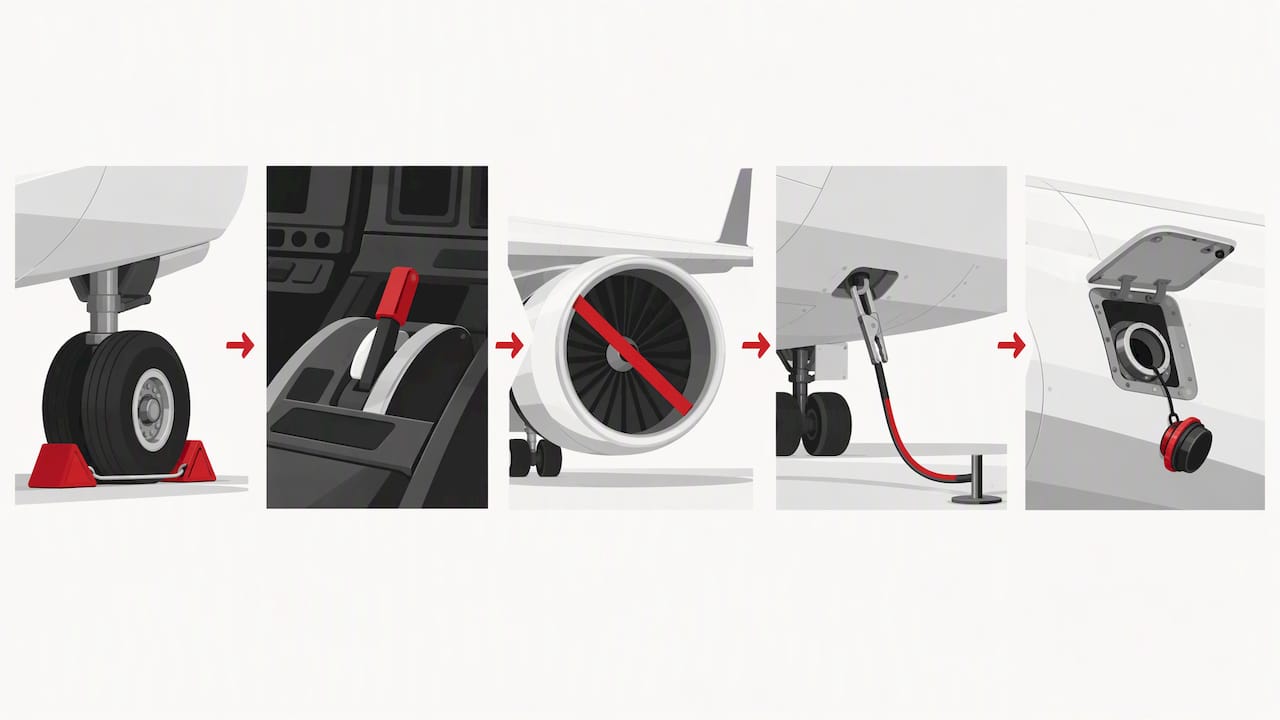
One more habit separates careful fuelers from lucky ones: do the sequence the same way every time. Chock, brake, engines off, bond, then open the cap. When the order never changes, a missed step stands out immediately.
Who may perform after-hours fueling?
Not everyone with a key and a fuel card is authorized to fuel an aircraft. The rules put responsibility on the airport certificate holder and on trained fueling personnel, and a pilot using a self-service system picks up a share of that responsibility.
Under 14 CFR 139.321, airport certificate holders must set standards for fuel handling that protect people and property. Those standards include training requirements for fueling personnel, regular inspections, and written confirmation that the required training happened. The FAA’s supervisory fueling safety guidance builds on that, describing what a fueling safety program should cover and how it is submitted to the FAA’s airport safety division.
In practice, that framework means:
- Fueling agents are trained, and the training is documented. The certificate holder keeps proof, not just a verbal assurance.
- Supervisors carry additional instruction. Supervisory fueling personnel are expected to hold training beyond what line fuelers receive, with recurrent instruction on a schedule the program sets. Ask your airport operator for its interval instead of assuming one.
- Equipment is inspected on a schedule. Inspection programs cover hoses, bonding cables, deadman controls, and vehicles, and records are retained. The NFPA 407 second draft report discusses inspection programs, vehicle parking and dispersal rules, and record retention in detail; it is a draft, so read it as direction of travel and confirm what the adopted edition requires.
- Parked fuelers are never left connected. A fueler or fuel vehicle must not be left unattended while a hose is connected to an aircraft, and vehicle parking and spacing follow the airport’s rules so a vehicle can drive away quickly in an emergency.
When you self-fuel, you are standing in the fueler’s shoes. Before you pull a trigger at an automated pump, you should:
- Inspect the equipment. Look over the hose, nozzle, bonding cable and clamp, deadman handle, and the area around the pump for damage, leaks, or missing parts. Do not use equipment that looks wrong.
- Locate the emergency shutoff before you start, not after something fails.
- Have spill containment within reach. Absorbent material should be accessible, and you should know where it is stored.
- Document the uplift. Record what you pulled, when, and from which pump. Keep your receipt.
Automated after-hours fueling shifts responsibility to the operator of the system, meaning you. That is why training matters here. If your crew will fuel regularly after hours, make sure whoever holds the nozzle has actually been trained to the airport’s standard and not merely shown the card reader once. Our own explainer on why fuel delivery requires trained operators covers what that training involves and why it is not optional.
What is the step-by-step checklist for self-service fueling at night?
Use this sequence at an automated pump or when a small ground crew is fueling with minimal staff. It is a practical routine, not a replacement for your airport’s rules or your aircraft’s manual, so where they differ, follow the stricter one.
- Confirm availability before you arrive. Call the FBO or airport operator, check the Chart Supplement, and write down the after-hours number and any access codes you were given.
- Plan your parking. Pick a spot that lets the aircraft and fuel equipment sit clear of buildings, with room to move the aircraft or equipment if something goes wrong. Check ramp lighting.
- Brief the crew and mark the work area. Everyone present knows who is fueling, who is the spotter, and where the emergency shutoff is. Cone off or otherwise mark the area, and post no-smoking signage if the equipment calls for it.
- Chock the aircraft and set the parking brake.
- Shut the engines down. Use an APU only where the operator’s procedures and the aircraft’s manual allow it. If passengers are aboard, follow the airport’s and aircraft operator’s procedures.
- Finish all ground preparation before you start the pump. Many automated units time out after authentication. Bond, position the hose, and open the filler cap area only when you are ready to start in sequence, so you are not scrambling against a timer.
- Bond the aircraft to the fueling equipment, and for overwing fueling bond the nozzle to the aircraft before opening the cap.
- Test the deadman control. Confirm it stops flow when released. If it does not, stop.
- Authenticate and start fueling, keeping one hand on the deadman at all times.
- Monitor quantity continuously. Watch the meter and the tank. Do not top off past what you planned.
- Stop fueling, release the deadman, and close the filler cap securely.
- Remove the nozzle bond and aircraft bond, then stow the hose properly instead of leaving it on the ramp.
- Walk around the area for drips, wet spots, or fuel odor before moving anything.
- Complete your records. Note gallons, fuel type, time, pump, and who fueled, and keep the receipt.
Pro Tip: Run the whole sequence, including bonding, hose positioning, and your quantity plan, before you touch the card reader, so a pump timeout can never push you into rushing a safety step.
If any step cannot be completed (a broken deadman, a missing bonding cable, lightning inside 5 miles, a pump that will not authenticate), stop and call the airport operator’s after-hours number. A delayed departure is a minor inconvenience compared with an ignition event.
What do you do in a spill or uncontrolled fuel flow?
Fast, simple actions matter most in the first seconds of a spill. The point is to stop the flow, protect people, and bring in the right responders before anyone starts cleaning up.
- Release the deadman control immediately. This should stop flow at the nozzle.
- If fuel keeps flowing, hit the emergency shutoff. NFPA 407 calls for emergency shutoffs and defined spill response actions, and airport rules such as the LAX regulations require the shutoff to be accessible. Know its location before you start fueling.
- Move people away from the spill and upwind, and keep ignition sources out of the area. No engine starts, no ground power, no switching of electrical equipment.
- Notify the right people. Call the airport operator’s emergency or after-hours line and, depending on the size and nature of the spill, aircraft rescue and firefighting (ARFF) or the local fire department. When in doubt, call. Nobody has ever been criticized for reporting a spill too early.
- Do not move the aircraft or fueling equipment until the responders or the airport operator clear you to do so. Moving through spilled fuel can create static or spread contamination.
Reporting thresholds vary by airport and by the authority having jurisdiction, so ask for the airport’s spill reporting rules ahead of time. In general, expect to report any uncontrolled flow, any spill reaching a drain or a large surface area, and any spill involving injury or fire risk. Airports with formal programs, like those described in the LAX document, spell out the reporting and cleanup process, and spills often trigger an investigation and corrective measures afterward.
Containment basics apply while you wait:
- Place absorbent material around the edges of the spill first, working inward, so it does not spread.
- Protect drains by covering or blocking storm drain inlets nearby, if you can do it safely without walking through the spill.
- Keep the area clear until the airport operator or fire department confirms it is safe.
- Preserve the scene and the records. Note times, quantities, and what was done, because the operator will want the account for its investigation and corrective actions.
For more on site-level inspection routines that reduce the odds of a spill in the first place, our guide to on-site fuel delivery safety protocols lays out the checks we use before and during a delivery.
Should you pre-fuel the night before?
Sometimes yes, but it is a decision with consequences, not a free convenience. Fuel is heavy, and every gallon you load the night before is weight you cannot trade for payload tomorrow.
Fuel weight and payload move in opposite directions. Loading full tanks overnight can push you into weight-and-balance limits you would not hit with a partial load, forcing you to bump baggage or passengers or defuel in the morning. Run the weight-and-balance numbers for the actual mission before you decide, not after.
Pre-fueling the night before makes sense when:
- The crew is relieved and the morning departure is time-critical, so pump access at dawn would add risk.
- The mission is set, with a known passenger and baggage load that fits the weight-and-balance envelope with full or planned fuel.
- Passenger comfort or schedule make a clean early departure valuable.
- Access is uncertain. If you cannot confirm fuel availability in the morning, fueling while someone is on duty can remove a major unknown.
It is a poor choice when:
- The load is not final, so you may need the weight margin for passengers or cargo.
- Overnight temperature swings are large enough to worry about fuel expansion in a full tank. Check your aircraft manual’s guidance for the specifics.
- The aircraft will sit unattended in poor conditions and you have not planned for the ramp security and fuel contamination concerns.
Whatever you choose, keep a clean record:
- Log the uplift: fuel type, quantity added, and the time.
- Log who fueled and which pump or truck was used.
- Keep the receipt for your operational and regulatory records.
- Verify the quantity in the tanks against your indicators before departure, not just the receipt.
The NTSB case from earlier applies here too. In CEN24LA102, the trouble started with a misread of what fuel was available and a reliance on expectations over verification. Fueling the night before gives you something the pilot in that report did not have: confirmed fuel in the tanks. You still have to check it.
If your crew must stay overnight near the aircraft, plan the stay as carefully as the fuel. Booking ahead through a service like crew lodging and overnight parking support keeps your people rested and close to the ramp, which matters when you are the one up before the sun to check tanks and walk the aircraft.
When should you call us for after-hours fuel?
Self-service works for some pilots at some fields. It is the wrong tool in other situations. If the pump is not there, the ramp is tight, or passengers are aboard, we bring the fuel to you.
We offer on-site diesel, gasoline, and DEF delivery for businesses, and our emergency fuel delivery team is available around the clock. Our team responds around the clock in covered areas. Contact us to confirm availability and timing. Coverage is strongest in San Antonio, Austin, Dallas-Fort Worth, and Salt Lake City, and our partner network reaches the rest of the continental U.S.
Consider calling us when:
- There is no self-service option at the field, or the pump is down.
- Passengers or crew are already aboard and you need a trained operator on scene.
- Ramp constraints make positioning a fuel vehicle or your own fueling a problem.
- You need documented operators, with a record of who fueled, what was delivered, and when.
What you get from a professional visit:
- Operators who follow bonding, deadman, and engine-off rules as standard practice.
- Emergency shutoff knowledge, so a problem is handled by someone who has done it before.
- Transparent, itemized invoicing you can file with your operational records.
We confirm scope and pricing when you request service; pricing is available on request. To schedule or request an immediate response, start with our emergency fuel delivery page, or look over our full list of fuel services, which covers red and clear diesel, gasoline, DEF, and scheduled deliveries. If you need fuel on the ramp before the next departure, call us now and tell us your location, fuel type, and timeline.

FAQ
What are the essential precautions when refueling an aircraft?
Shut the engines down, bond the aircraft to the fueling equipment, keep the deadman control working, and keep smoking and open flames away from the aircraft and fueling equipment, following the airport’s rules. Stop fueling if lightning is within 5 miles, per FAA guidance on supervisory fueling programs. Know where the emergency shutoff is before you start.
How long does it take to refuel an aircraft?
It depends on the aircraft, the fuel quantity, and the pump or truck flow rate, so no single time applies. A small piston aircraft at a self-service pump will fuel far faster than a larger aircraft on a truck. Allow extra time after hours for authentication, setup, and your documentation.
What does the 80/20 rule mean in aviation?
There is no single official informal rule in aviation that applies to every situation, and such phrases can be used in different ways. We could not confirm one definition that applies to fueling, so do not rely on it for fuel planning. Use your aircraft manual, weight-and-balance data, and your operator’s fuel policy instead.
Can you fuel an aircraft yourself at an unattended airport?
You can at fields that provide automated self-service pumps and authorize your access, but you take on the operator’s responsibilities: equipment checks, bonding, spill readiness, and records. Confirm after-hours availability first, because a listed pump does not guarantee fuel on arrival, as the NTSB found in report CEN24LA102.
Who is required to be trained to fuel aircraft?
Airport certificate holders must set training requirements for fueling personnel, along with regular inspections and written confirmation of training, under 14 CFR 139.321. Ask your airport operator for its training and recurrent instruction intervals, since they are set by the airport’s program.
Sources
Confirm your airport’s specific policies and the Chart Supplement entry before you arrive.
- Guidelines for Submitting a Supervisory Fueling Safety Program to the Airport Safety and Operations Division, Office of Airports
- eCFR :: 14 CFR 139.321 – Handling and storing of hazardous substances and materials. (FAR 139.321)
- CEN24LA102 Final Report
Recent Comments