
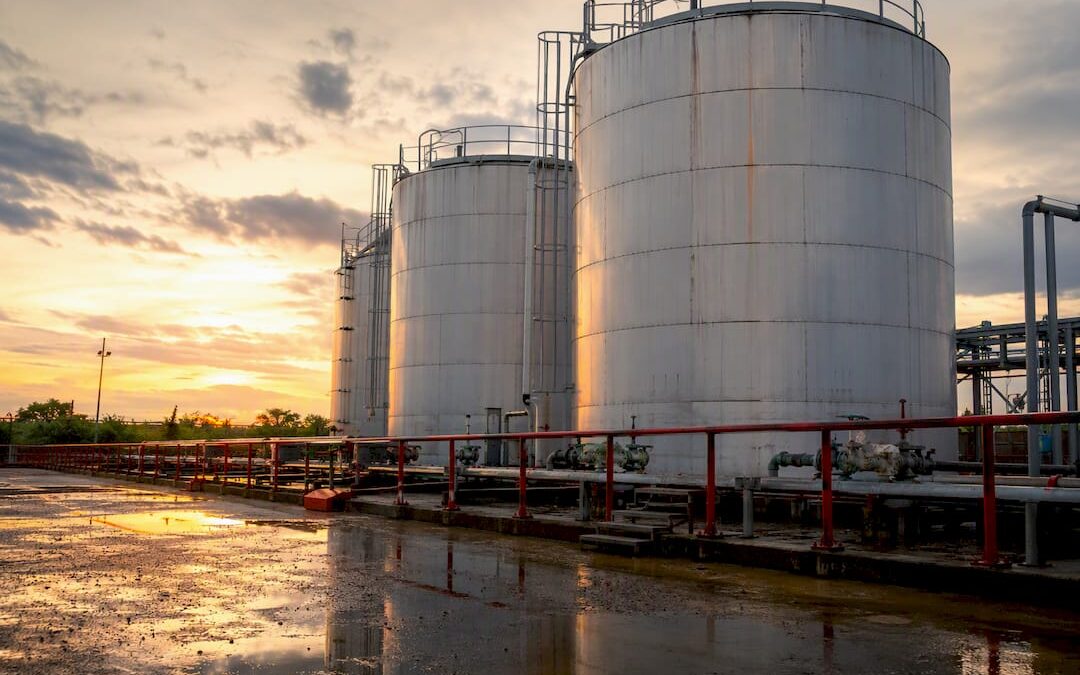
Untreated diesel is reliably usable for about 6 to 12 months. Properly treated and monitored diesel typically stretches to 18 to 24 months, and well-run underground systems can push past 36 months. Modern ULSD and biodiesel blends degrade faster than the diesel your predecessor stored a decade ago, which makes water control and disciplined testing the two things that actually determine your outcome. If a tank has sat untouched for more than a year, test it or treat it before you trust it.
TL;DR:
- Diesel stored in well-maintained underground, monitored tanks can last over three years, but untreated tanks typically remain reliable for only 6 to 12 months.
- Biodiesel blends like B20 and higher significantly reduce storage stability, especially in hot, vented conditions, with failure possible within weeks.
- Regular water removal, tank temperature control, and stabilizer treatment are critical measures to extend diesel shelf life.
- Scheduled testing, water drainage, and fuel polishing help detect and prevent microbial growth and fuel degradation before equipment failure.
- Outsourcing fuel management and polishing services offers a reliable way to ensure fresh, stable diesel, especially for mission-critical and remote operations.
Table of Contents
- What Determines Realistic Diesel Fuel Storage Life
- How Does Diesel Fuel Degradation Actually Happen?
- How to Extend Diesel Shelf Life in Storage
- What Monitoring Schedule Keeps Diesel Fuel Testing on Track
- Signs Your Diesel Has Gone Bad
- When Outsourcing Fuel Management Makes Sense
- Let Anytime Fuel Pros Handle the Fuel So You Don’t Have to Rotate It
- Sources
What Determines Realistic Diesel Fuel Storage Life
There’s no single number for how long diesel lasts, because the answer depends entirely on how the fuel is stored, not just how old it is. Reliability engineers working with backup generators and remote fleets use a tiered framework to size up risk fast, and it works just as well for a facilities manager checking a single tank as it does for someone managing fuel across ten sites.
Tier 1 covers untreated fuel in aboveground tanks with no monitoring. Expect 6 to 12 months of usable life before oxidation and water contamination start showing up in filters. Tier 2 adds basic housekeeping: a sealed tank, some temperature control, and occasional visual checks. That buys you closer to 12 to 18 months. Tier 3 is treated fuel: stabilizer added at fill, biocide dosing on a schedule, and quarterly draining. This is where treated diesel reaching 18 to 24 months becomes a realistic target. Tier 4 is the mission-critical tier, monitored underground storage with quarterly lab testing and active fuel polishing, where fuel can remain serviceable for 24 to 36 months or longer.
| Tier | Storage discipline | Realistic shelf life |
|---|---|---|
| 1 | Untreated, no monitoring | 6–12 months |
| 2 | Sealed tank, occasional checks | 12–18 months |
| 3 | Stabilized and biocide-treated | 18–24 months |
| 4 | Monitored, polished, quarterly tested | 24–36+ months |
Two variables shift fuel between tiers faster than anything else. Heat accelerates oxidation, so a tank baking in a Texas equipment yard degrades faster than the same fuel sitting in a cool underground vault. Biodiesel content does something similar from a different angle: B20 and higher blends are noticeably less stable and can develop problems within weeks under hot, vented conditions rather than months.
How Does Diesel Fuel Degradation Actually Happen?
Diesel doesn’t go bad the way milk does. It degrades through three distinct mechanisms, and knowing which one is at work tells you what to fix.
Oxidation happens when diesel reacts with oxygen over time, forming gums and varnish that clog fuel filters and gum up injectors. This is the slow, chemical version of decay, and it’s the reason ASTM D2274 oxidation stability testing exists. Lab results from that test roughly correspond to how the fuel will behave over a year of storage at 25°C, giving you a real data point instead of a guess.
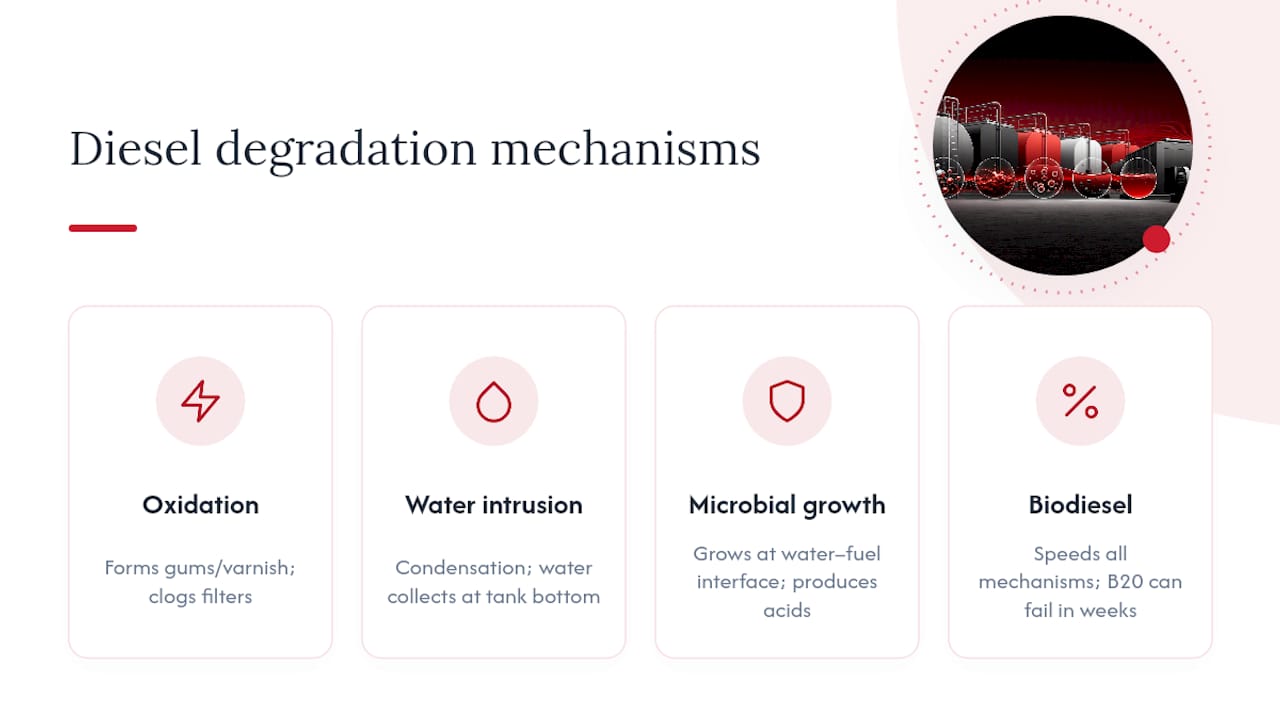
Water intrusion is the more urgent problem. Condensation forms inside a tank every time temperatures swing between day and night, and that water sinks to the bottom because it’s denser than fuel. The resulting water-fuel interface becomes a breeding ground.
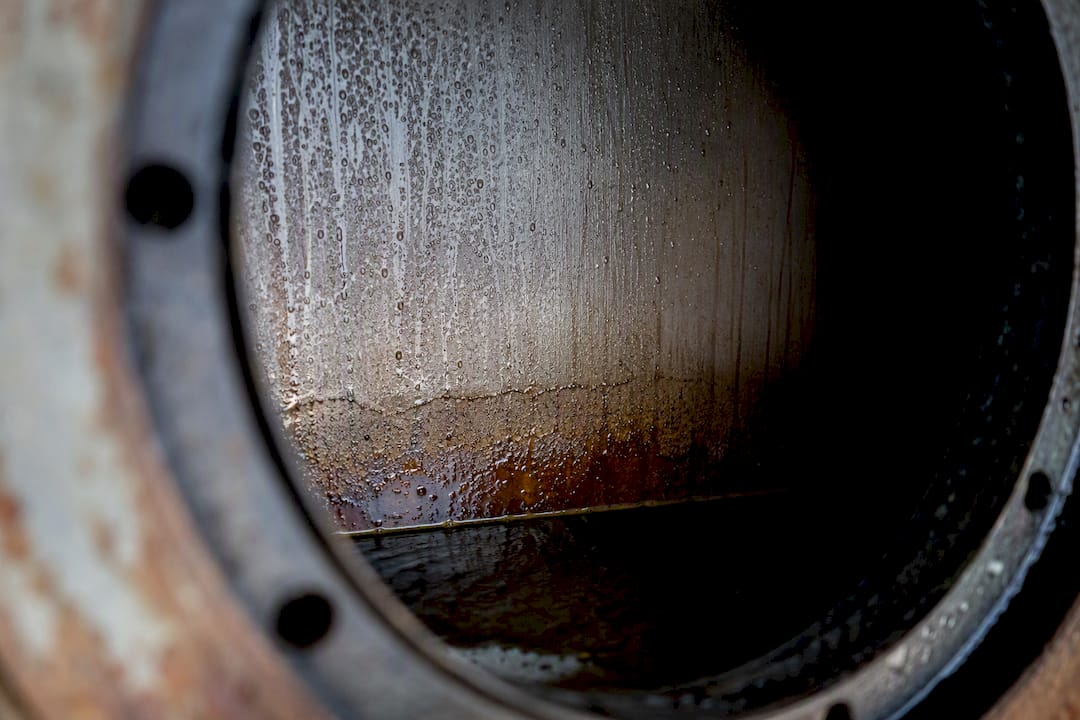
Microbial growth thrives at exactly that interface, where bacteria and fungi feed on hydrocarbons and produce acidic byproducts that corrode tanks from the inside. Preventing water buildup and draining tank bottoms regularly is the single most effective step you can take against it.
Biodiesel blends complicate all three mechanisms at once. Because ultra-low sulfur diesel regulations stripped out natural antioxidants during refining, modern ULSD oxidizes faster than the higher-sulfur diesel used before those rules took effect. Add biodiesel’s higher water affinity and organic content, and you get blends like B20 that can fail in as little as six weeks in hot, vented storage. If your operation runs biodiesel blends, treat every shelf-life estimate in this article as the optimistic end of the range, not the guarantee.
How to Extend Diesel Shelf Life in Storage
Extending diesel shelf life comes down to five decisions, and you can make most of them before fuel ever hits your tank.
- Choose the right tank and site. Corrosion-resistant, sealed tanks placed in shaded or underground locations hold a stable temperature near 70°F, which slows oxidation dramatically compared to a tank exposed to direct sun. Proper venting matters too; a sealed tank without adequate venting traps moisture-laden air inside.
- Keep tanks full. Reducing headspace by keeping tanks topped off limits the air volume available for condensation to form, which is one of the cheapest controls available to you.
- Rotate stock and label fills. First-in, first-out rotation with a fill date on every tank keeps you from discovering a two-year-old batch during an emergency.
- Treat fuel at delivery, not after symptoms appear. Add a stabilizer at the point of fill rather than waiting for signs of trouble, then follow a maintenance dosing schedule for biocide. A demulsifier helps separate any water that does intrude so it can be drained before microbes take hold.
- Install water-control hardware. Water separators, desiccant breathers on tank vents, and a routine bottom-draining schedule catch the problem before it becomes biological.
Pro Tip: Dose biocide as shock treatment when you first suspect contamination, then switch to a lower maintenance dose on a regular schedule. Waiting until fuel smells like rotten eggs means you’re treating an active infestation, not preventing one.
Cold climates add a wrinkle: anti-gel additives prevent paraffin wax from clouding fuel lines and filters when temperatures drop, and they matter more with biodiesel blends, which gel at higher temperatures than straight diesel. Additives are a real lever, but they supplement storage discipline rather than replace it. No stabilizer fixes a tank that never gets rotated or checked.
What Monitoring Schedule Keeps Diesel Fuel Testing on Track
Your testing cadence should scale with how much is riding on that tank. A backup generator for a single job site trailer doesn’t need the same rigor as the fuel keeping a data center’s critical load running.
For Tier 2 and Tier 3 storage, a practical schedule looks like this:
- Monthly visual sample checks for cloudiness, sediment, or a water layer at the bottom of a clear sample jar.
- Quarterly draining of tank bottoms to remove accumulated water before it reaches the microbial danger zone.
- An annual full lab panel covering water content, particulate count, and oxidation stability.
Tier 4 operations, the ones running mission-critical generators or multi-site fleets, typically move to a quarterly lab panel paired with monthly polishing recirculation. Lab checks worth asking for include water content by ASTM D6304, particulate contamination counts, oxidation stability under ASTM D2274, and a microbial culture test if you’ve had prior contamination issues.
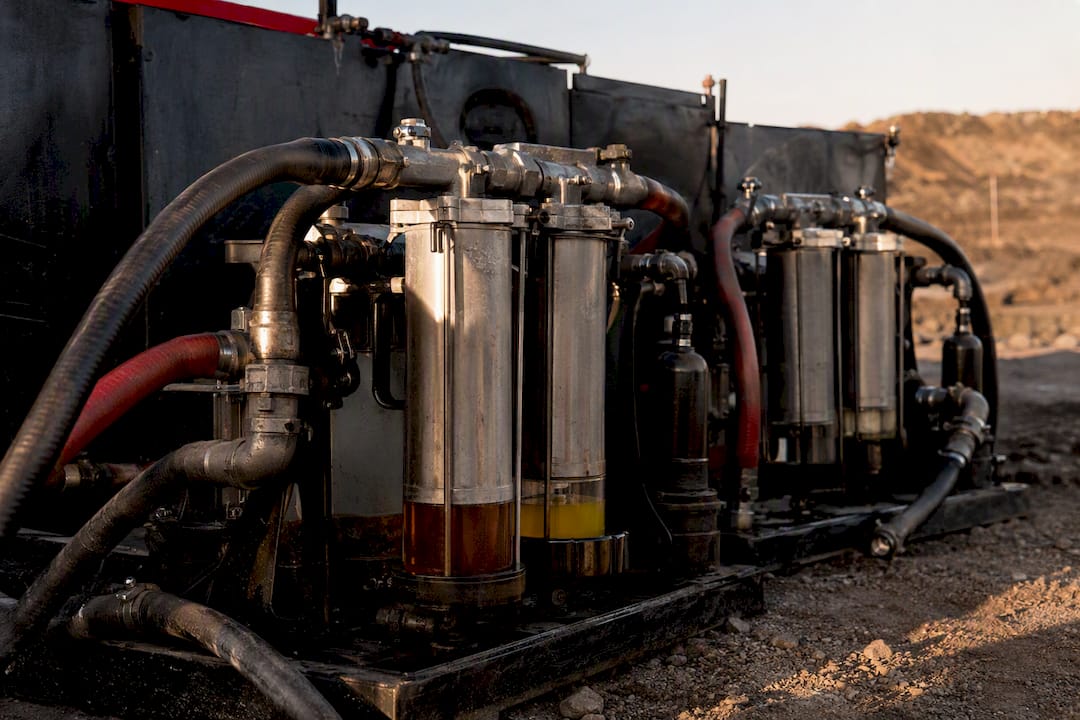
Fuel polishing is the professional remediation step: recirculating stored fuel through filtration sized for the tank to strip out water, microbial growth, and sediment without draining the whole system. It’s worth scheduling before a lab result comes back bad, not just after. Keep records of every test and polishing cycle. That paper trail is what tells you whether a tank is trending toward trouble or holding steady.
Signs Your Diesel Has Gone Bad
Bad diesel usually announces itself before it strands a generator or a piece of heavy equipment. Watch for:
- A dark, hazy, or cloudy appearance instead of the normal clear-to-amber color.
- A sour or rotten-egg smell, which signals microbial activity.
- Visible sediment, sludge, or a distinct water layer at the tank bottom.
- Frequent fuel filter clogging or a sudden drop in engine performance.
- Fuel that separates into layers when left standing in a clear sample container.
If you see any of these signs, don’t run the tank. Change the fuel filter first, drain standing water from the tank bottom, and apply a shock dose of biocide if microbial growth is suspected. Roughly a third of diesel engine problems traced to fuel quality come down to contamination that could have been caught with a bottom-drain check. Mild contamination often responds to filtration and biocide treatment. Heavy sludge, a strong sour odor, or a failed lab panel means it’s time to call in professional polishing or replace the fuel outright rather than gamble on equipment downtime.
When Outsourcing Fuel Management Makes Sense
Some situations justify bringing in professional help rather than managing everything in house. Mission-critical generator tanks at data centers, multi-site fleets spread across several counties, and remote job sites without easy fuel access all share the same problem: the cost of a failed tank far exceeds the cost of preventing one.
Professional fuel polishing removes water, microbial growth, and sediment through recirculating filtration sized to the tank, restoring fuel that would otherwise need full replacement. Scheduled bulk delivery and top-offs shrink the window fuel sits in storage in the first place, which is the most direct way to sidestep degradation entirely. For sites without reliable access, emergency fuel response closes the gap when a tank runs low faster than expected.
Let Anytime Fuel Pros Handle the Fuel So You Don’t Have to Rotate It
Anytime Fuel Pros gives you a way to sidestep the entire shelf-life problem: instead of managing rotation, additive schedules, and lab tests on aging fuel, you get fresh diesel delivered on the schedule your operation actually needs, with fuel polishing available for tanks that already show signs of trouble.

For data centers running backup generators, that means scheduled top-offs that keep tanks near full, which limits the condensation and headspace problems covered above, plus 24/7 emergency response if a storm knocks out grid power. For multi-site fleets and remote job sites, it means one point of contact instead of juggling regional suppliers and guessing which tank needs attention first. Anytime Fuel Pros delivers dyed and clear diesel, DEF, and bulk fuel across Texas and Utah, with nationwide coverage through a trusted partner network for multi-state operations.
If a tank on your site is past the 12-month mark or you’re setting up a new backup power system and want to build good storage habits from day one, request on-site diesel delivery and get fuel on a schedule that keeps rotation from ever becoming a problem again.
Sources
- How Long Can You Store Diesel Fuel? — DEPco
- Biodiesel’s impact on diesel oil — AMSOIL Blog
- Guidelines for long-term fuel storage of diesel and storage tanks — Bell Performance
- Diesel fuel standards and rulemakings — EPA
Recent Comments