
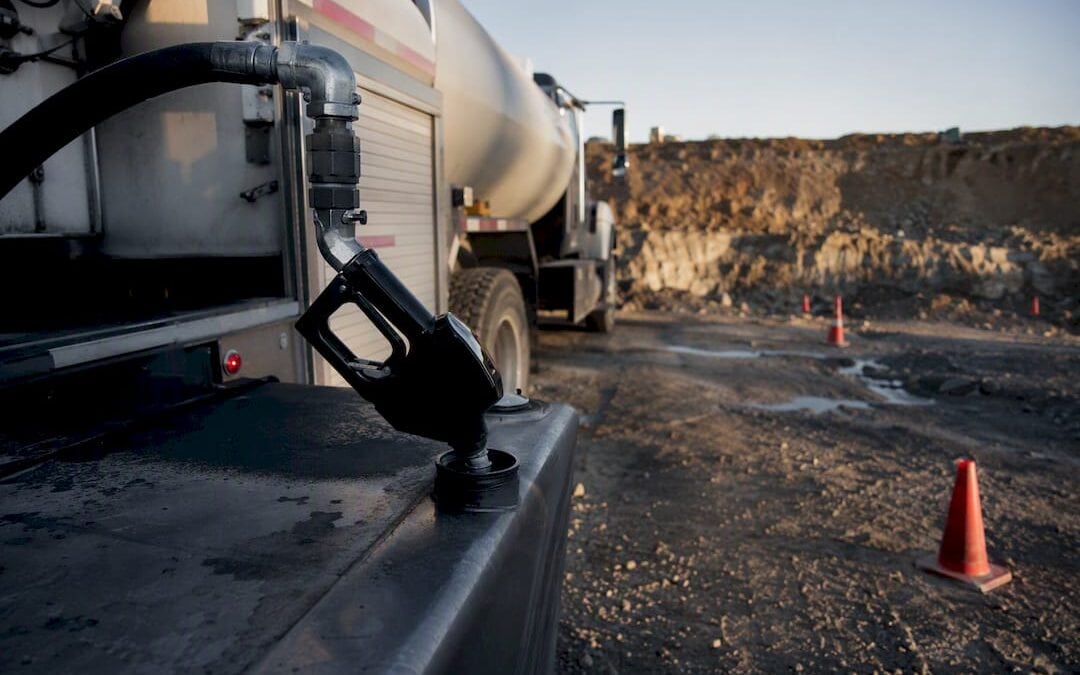
Regular diesel means on‑highway #2 diesel refined to the Ultra‑Low Sulfur Diesel standard of 15 ppm sulfur or less. It’s the default fuel for most trucks, generators, and heavy equipment running on public roads, and it’s the right call unless a specific condition pushes you toward a premium blend or a winter formulation.
Three things to know before you fuel up:
- Regular diesel is EPA‑regulated ULSD, taxed for road use, and sold clear.
- Dyed (red) diesel is chemically similar but tax‑exempt for off‑road use only.
- Using dyed diesel in an on‑road vehicle is illegal and carries real financial penalties.
Key Takeaways
Regular diesel is ULSD-grade #2 fuel built for on-road use, and matching fuel type to engine condition and season prevents the deposits, gelling, and compliance penalties that cost fleets real money.
| Point | Details |
|---|---|
| Regular diesel is ULSD | On-highway diesel must meet the 15 ppm sulfur standard set by the EPA and EIA. |
| Premium is situational | Additive packages help older engines or high-hour fleets more than newer, warrantied equipment. |
| Dyed diesel is off-road only | Red dye signals tax-exempt fuel, and using it on public roads triggers penalties. |
| Cold weather needs planning | Diesel #1 blends or cold-flow improvers prevent gelling before hard freezes hit. |
| Anytime Fuel Pros verifies specs | On-site delivery includes sulfur and dye verification plus documentation for audit-ready fleets. |
Table of Contents
- Regular Diesel vs. Premium Diesel: Is the Upgrade Worth It?
- Regular Diesel vs. Off-Road Diesel: Why the Dye Matters
- Diesel #1 vs. Diesel #2: Choosing for Cold Weather
- Cetane, Lubricity, and Additives: What the Fuel Spec Numbers Actually Mean
- A Checklist for Picking the Right Diesel
- How Anytime Fuel Pros Keeps Fuel Specs Straight in the Field
- Get Reliable Regular Diesel Delivered Where You Need It
- Frequently Asked Questions
- Sources
Regular Diesel vs. Premium Diesel: Is the Upgrade Worth It?
Premium diesel is regular #2 diesel with an additive package layered on top: detergents to keep injectors clean, cetane boosters for faster ignition, lubricity agents, and stability additives that slow oxidation during storage. None of that changes the base fuel’s ASTM classification. It just treats it.
The real-world payoff is modest and situational. You might see fewer injector deposits, a slightly easier cold start, and occasionally a small mileage bump, but nobody should expect a dramatic fuel-economy jump from switching brands at the pump.
- Choose premium if you’re running an older engine with known deposit buildup, a high-hour fleet vehicle, or equipment with a documented fuel-system issue.
- Skip it on newer engines under warranty that get routine maintenance and already run on quality ULSD.
Pro Tip: If you’re unsure whether premium pays off, run one piece of equipment on it for a season and compare fuel filter change intervals against a sister unit on regular. That’s a cheaper test than guessing.
The rule of thumb: premium is maintenance insurance, not a performance upgrade. Pay for it when the engine’s history justifies it, not by default.
Regular Diesel vs. Off-Road Diesel: Why the Dye Matters
Off-road diesel starts as the same base fuel refined for on-highway use, then gets dyed red and sold tax-exempt because it’s meant for generators, farm equipment, and other equipment that never touches public roads. The tax break is the entire reason for the dye. Federal and state fuel taxes fund road infrastructure, and dyed fuel signals that no road tax was collected on that batch.
Running dyed diesel in an on-road vehicle isn’t a gray area. The IRS and state agencies actively enforce this, and penalties can run into thousands of dollars per violation, plus back taxes, for a fleet caught with red fuel in an on-road tank.
- Visual check: Regular diesel runs clear to straw-colored; off-road diesel is dyed red.
- Paper trail: Legitimate dyed fuel deliveries come with supplier documentation identifying it as tax-exempt, off-road product.
- Storage separation: Fleets running both fuel types need physically separate tanks with clear labeling to avoid cross-contamination or accidental misuse.
For fleet managers juggling mixed equipment, the safest practice is treating dyed and clear diesel as two entirely separate supply chains, ordered, delivered, and logged separately. Anytimefuelpros handles dyed diesel delivery with that separation built into the process, so paperwork matches product every time.
Diesel #1 vs. Diesel #2: Choosing for Cold Weather
Diesel #2 is what most people mean by “regular diesel.” It has higher energy density and is the standard year-round fuel. Diesel #1 is a lighter distillate with better cold-flow properties but slightly less energy per gallon, which is why it shows up almost exclusively in winter operations.
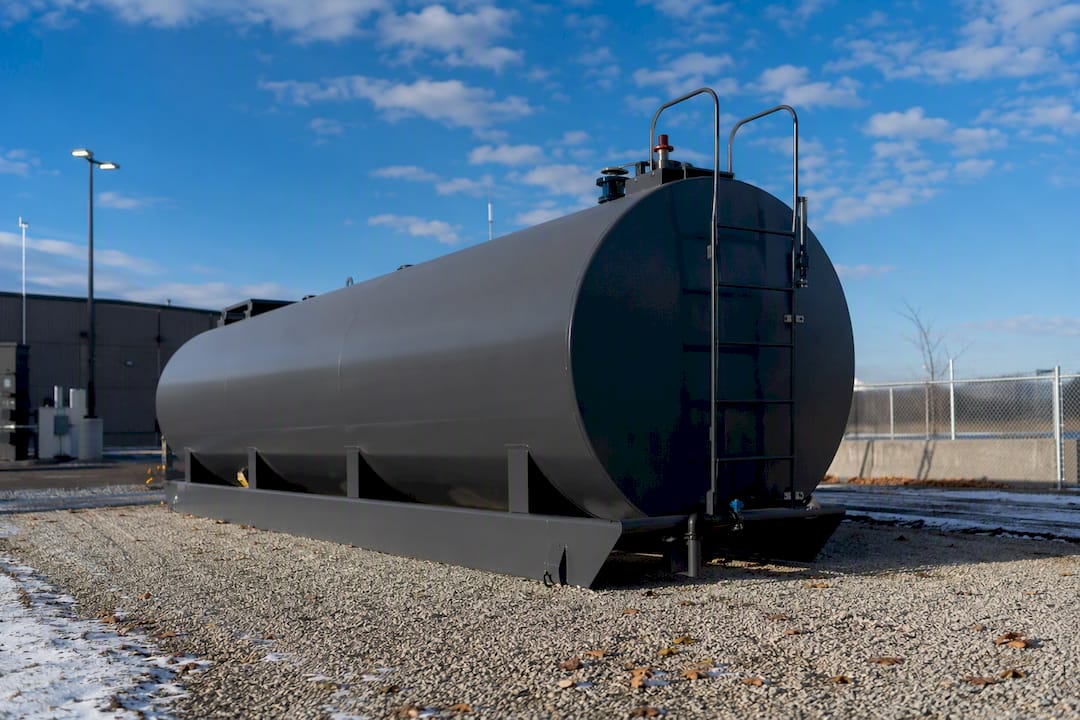
The problem Diesel #1 solves is gelling. As temperatures drop, paraffin wax naturally present in #2 diesel starts to crystallize, clogging fuel filters and starving the engine. Symptoms show up as hard starts, stalling, or a truck that simply won’t fire on a cold morning.
Operators handle this a few ways:
- Blend #1 and #2 in ratios matched to expected temperatures, a practice most bulk suppliers manage automatically through seasonal blending.
- Add cold-flow improvers to a #2 diesel supply to lower its gel point without switching fuel entirely.
- Heat storage tanks or use tank blankets for equipment that sits outdoors overnight in freezing conditions.
- Plan procurement by season, ordering winterized blends ahead of the first hard freeze rather than reacting to a gelled fuel line.
Cetane, Lubricity, and Additives: What the Fuel Spec Numbers Actually Mean
Cetane number measures how quickly diesel ignites under compression. Higher cetane means smoother combustion, easier cold starts, and less knock. Most pump diesel in the U.S. sits in the mid-40s, and jumping a few points rarely transforms performance, but it does affect how cleanly an engine fires up in cold weather.
Lubricity matters because refining diesel down to 15 ppm sulfur also strips out natural lubricating compounds that used to protect fuel pumps and injectors. Additive packages replace that lost lubricity, which is part of why the EPA tracks and registers approved diesel additives rather than leaving it unregulated.
- Detergents clean and prevent injector deposits.
- Stabilizers slow fuel degradation in long-term storage.
- Cold-flow improvers lower the gel point for winter operation.
- Cetane improvers speed ignition for easier starts.
Fuel injectors, high-pressure pumps, and emission-control components like DPFs and SCR systems are the parts most sensitive to fuel quality, which is exactly why ULSD’s shift to advanced aftertreatment made additive quality a bigger deal than it used to be.
A Checklist for Picking the Right Diesel
Before your next delivery or fill-up, run through this order of priorities:
- Check the OEM manual first. Manufacturer specs override any general rule about regular versus premium.
- Confirm ULSD compliance. Ask for documentation showing the fuel meets the 15 ppm sulfur spec for on-road use.
- Verify cetane and additive content if you’re paying for a premium tier, don’t just take the pump label’s word for it.
- Confirm dyed versus clear matches your equipment’s legal use case.
- Ask about seasonal blending if you’re ordering ahead of winter.
When talking to a supplier, ask directly about sulfur spec, cetane number, cold-flow treatment, and whether they can provide paperwork for any dyed fuel order. Red flags include missing documentation, an off smell or color that doesn’t match what you ordered, or deliveries that arrive inconsistently from load to load.
Pro Tip: Keep a simple log of delivery tickets, fuel color, and any lab test results for at least a year. If a warranty claim or fuel-quality dispute ever comes up, that paper trail is worth far more than memory.
How Anytime Fuel Pros Keeps Fuel Specs Straight in the Field
Commercial fleets don’t have the luxury of guessing what’s in the tank. Anytimefuelpros verifies fuel specifications at the point of delivery, checking that clear diesel meets ULSD standards and that dyed diesel orders come with the paperwork to back their tax-exempt status, before a single gallon transfers.
That verification pairs with operational structure: scheduled recurring fills for predictable consumption, bulk tank management for job sites and equipment yards, and 24/7 emergency response when a generator or fleet runs dry unexpectedly. Every delivery gets logged, giving fleet managers a documentation trail for audits or internal fuel-quality reviews.
- Spec checks at delivery to prevent cross-contamination between dyed and clear fuel.
- Scheduled and on-demand diesel delivery to avoid downtime.
- Bulk fuel logistics detailed in how diesel gets delivered from refinery to tank.
Get Reliable Regular Diesel Delivered Where You Need It
Sourcing the right diesel spec shouldn’t mean chasing down a supplier every time a tank runs low or a job site opens in a new location. Anytimefuelpros brings ULSD-compliant clear diesel and properly documented dyed diesel directly to job sites, equipment yards, and fleet depots, with spec verification handled before the fuel ever transfers.
That means no guessing whether a delivery meets ASTM D975 grade requirements, no scrambling to prove dyed-fuel compliance during an audit, and no sending a crew member off-site just to keep equipment running. Whether you’re managing a single excavator or a multi-state fleet, on-demand and scheduled diesel delivery keeps fuel where the work is. If you’ve got questions about which spec fits your equipment, reach out with your fueling questions and get a straight answer before your next order.
Frequently Asked Questions
Is regular diesel the same as #2 diesel?
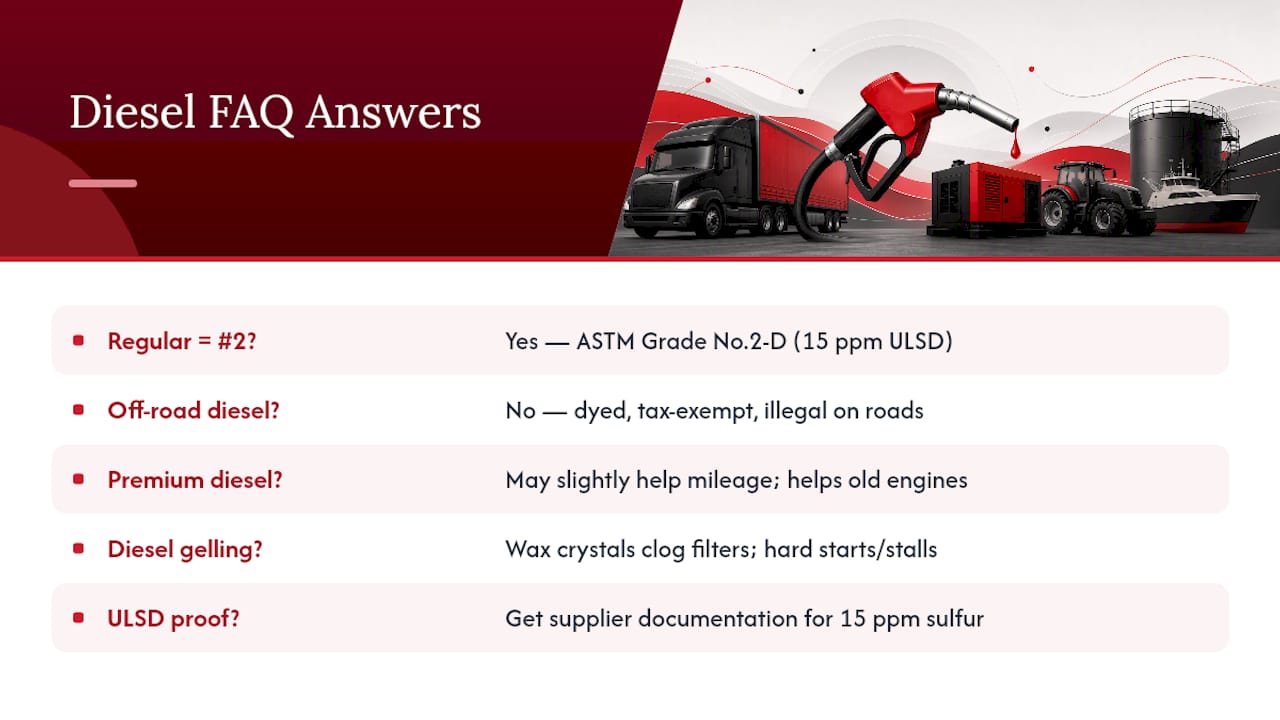
Yes. “Regular diesel” is the common name for ASTM Grade No. 2‑D, refined to the 15 ppm ULSD sulfur standard for on-highway use.
Can I use off-road diesel in my truck to save money?
No. Off-road diesel is tax-exempt and dyed red specifically because it’s restricted to non-road equipment. Using it on public roads is illegal and can trigger significant fines.
Does premium diesel actually improve fuel efficiency?
Sometimes, slightly. Premium additive packages can reduce injector deposits and support cleaner combustion, but the mileage difference is usually small and matters most for older or high-hour engines.
What happens if diesel gels in cold weather?
Wax crystals form in the fuel, clogging filters and starving the engine of fuel. Symptoms include hard starting, stalling, or a complete no-start in freezing temperatures.
How do I know if a diesel delivery meets ULSD standards?
Ask your supplier for documentation confirming the fuel meets the 15 ppm sulfur specification. A reputable delivery partner should provide this without hesitation.
Sources
For procurement or compliance documentation, go straight to the primary standards: EIA’s diesel fuel explainer, EPA’s diesel fuel standards, ASTM D975, and DieselNet’s regulatory history. Cross-check any contract language against your OEM manual.
- Diesel fuel explained | U.S. Energy Information Administration (EIA)
Recent Comments