
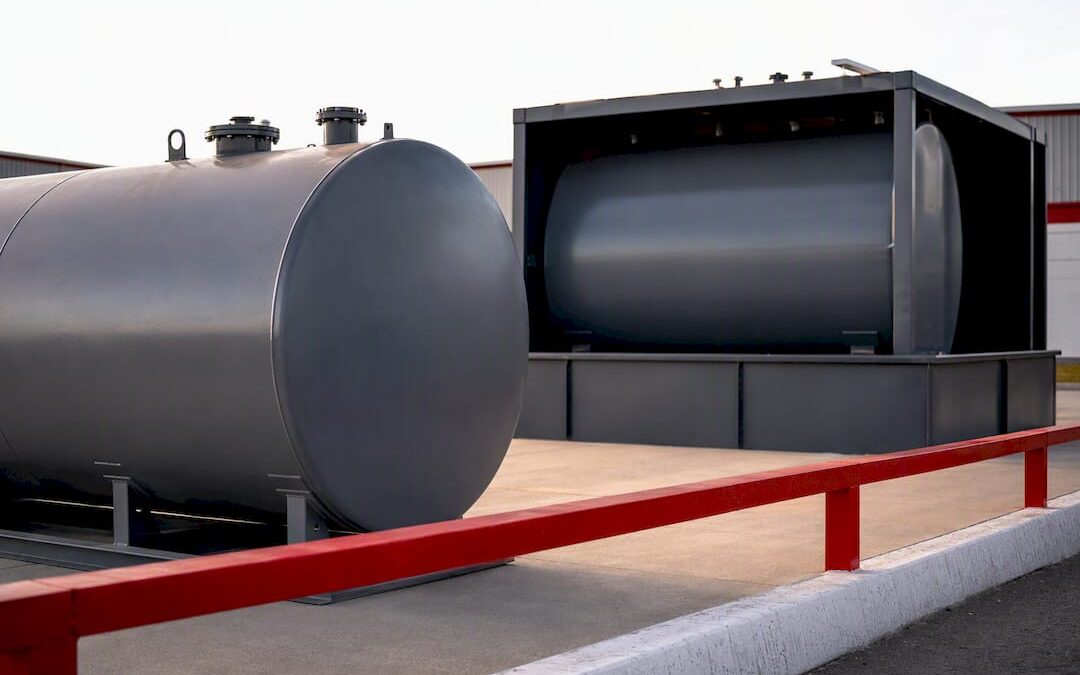
UL 142 is the baseline listing for shop-built steel aboveground tanks, while UL 2085 is the protected listing that adds fire resistance, impact protection, and built-in secondary containment. Choose UL 142 for lower-risk, well-spaced sites with generous setbacks; choose UL 2085 when a building sits close by, when the site handles vehicle or foot traffic, or when local code caps how far you can set a tank back. Always confirm the listing mark and control number against your permit application before you buy, and loop in your local authority having jurisdiction (AHJ) early.
TL;DR:
- UL 142 tanks are suitable for rural, low-traffic sites with generous setbacks, but do not provide fire protection or impact resistance.
- UL 2085 tanks are designed for fire resistance, impact protection, and integrated secondary containment, making them ideal for high-traffic or dense urban sites.
- The cost difference is significant, with UL 2085 tanks typically being more expensive, but this expense may be offset by lower insurance premiums and smaller setbacks.
- Inspectors require specific UL listing marks and documentation, including control numbers and leak test reports, to approve both types of tanks.
- Renting tanks for short-term projects can bypass the higher costs and complex siting requirements of UL 2085 tanks, especially for temporary or emergency fuel needs.
Table of Contents
- UL 142 vs UL 2085: What UL 142 Actually Covers
- UL 142 vs UL 2085: What Makes UL 2085 a Protected Tank
- UL 142 vs UL 2085 Comparison: Fire, Impact, Containment, and Cost
- How Codes and Inspectors Use These UL Listings
- Procurement Checklist: Picking the Right Standard for Your Site
- Verifying the UL Listing Before You Sign Off
- When Anytime Fuel Pros Recommends Rental Over Ownership
- A Practical Alternative: Rent and Deliver Instead of Building Permanent Storage
- Sources
UL 142 vs UL 2085: What UL 142 Actually Covers
UL 142 governs shop-fabricated steel atmospheric tanks built to store stable, noncorrosive flammable and combustible liquids like diesel and gasoline. It’s the standard most job-site and yard tanks are built to, and it’s been the default in commercial fuel storage for decades. The listing tells you the tank was built and tested to a recognized construction standard, but it says nothing about fire survivability.
Manufacturers test 100% of production tanks for leakage and must affix a UL Listing Mark showing the control number and construction type before the tank ships. That control number is your paper trail during permitting and inspection.
A few practical points matter here:
- UL 142 tanks come in single-wall and double-wall (secondary-contained) configurations, but neither carries a fire rating.
- They’re well suited to rural yards, remote job sites, and locations with wide setbacks from occupied structures.
- They’re generally not appropriate for reduced-setback dispensing sites or high-traffic areas where a vehicle strike or nearby fire is a real possibility.
UL 142 vs UL 2085: What Makes UL 2085 a Protected Tank
UL 2085 exists for one reason: to keep a fire outside the tank from becoming a fire inside the tank. It requires construction that limits heat transfer to the primary tank during a two-hour hydrocarbon pool fire, along with impact protection and integral secondary containment built into the tank itself, not bolted on afterward.
Beyond fire resistance, UL 2085 tanks typically include interstitial monitoring, so a breach in the primary wall shows up before fuel reaches the ground or the outer environment. Factory testing verifies both the insulation performance and the containment integrity before the tank leaves the plant.
Where you’ll typically see UL 2085 required:
- Data centers and other mission-critical facilities where downtime or fire spread carries outsized cost.
- Urban and dense commercial sites where code-mandated setbacks can’t be met with an unprotected tank.
- Generator base tanks near occupied buildings, dispensing installations, and any site where reduced clearance is the only option.
UL 142 vs UL 2085 Comparison: Fire, Impact, Containment, and Cost
The real decision comes down to five factors, and they all trace back to one question: how much risk does your site’s location create?
- Fire performance. UL 142 carries no fire rating. UL 2085 is engineered to protect the tank’s contents through a two-hour hydrocarbon fire exposure, which matters most when the tank sits near structures, equipment, or people.
- Impact protection. UL 2085 tanks are built to withstand vehicle strikes and debris impact. UL 142 tanks generally need separate bollards or barriers if impact is a concern.
- Containment and leak detection. UL 142’s double-wall option provides secondary containment, but UL 2085 integrates containment with interstitial monitoring as a standard design feature, not an add-on.
- Setbacks and permitting. Protected tanks routinely qualify for reduced setback distances under the International Fire Code, which can be the deciding factor on tight urban parcels.
- Cost and insurance. UL 2085 tanks carry a real price premium over UL 142 equivalents, but that premium can be offset by lower insurance rates and by avoiding the added land cost of larger setbacks.
Facilities that skip this analysis often find out the hard way during plan review. Industry guidance is direct on this point: a protected tank listing is often the only way to satisfy setback rules on a constrained urban site, no matter how well-built an unprotected tank is.
How Codes and Inspectors Use These UL Listings
NFPA 30 and the International Fire Code don’t just recommend UL 142 or UL 2085. They require atmospheric tanks to be designed and built to a recognized standard, and these two UL standards are the ones inspectors check against. Miss the right listing and your project stalls at plan review, or worse, fails inspection after the tank is already on site.
Here’s what an AHJ typically wants to see before sign-off:
- The UL Listing Mark and control number, matched against the submitted spec sheet.
- Documented setback distances that align with the tank’s actual listing, not an assumed one.
- Secondary containment and monitoring details, especially for UL 2085 installations.
- Any applicable SPCC planning documentation, since EPA spill-prevention rules can layer on top of local fire code requirements.
- OSHA flammable-liquids compliance records, particularly for sites with active dispensing.
Our guide to NFPA 30 diesel storage requirements walks through what inspectors flag most often on aboveground installations.
Procurement Checklist: Picking the Right Standard for Your Site
Run through this before you sign a purchase order:
- Map the risk. How close is the nearest occupied building, and what’s the vehicle or foot traffic like near the proposed tank pad?
- Ask the code-trigger questions. Does your site need reduced setbacks, active dispensing, or high-occupancy proximity? Any yes usually points to UL 2085.
- Run the real budget. Compare the UL 2085 price premium against the cost of extra land, foundation work, and setback compliance a UL 142 tank would demand.
- Demand documentation. Require the UL plate and control number, production leakage test records, and interstitial monitoring specs before final payment.
- Confirm maintenance obligations. Ask who inspects the monitoring system and how often, especially on protected tanks with more moving parts.
Watch for vendor quotes that describe a tank as “UL listed” without naming which standard. That phrase alone tells you nothing about fire or impact protection.
Pro Tip: Ask the vendor to write the exact UL category (142 or 2085) into the purchase contract, not just “UL listed.” A generic mark won’t satisfy an AHJ that requires the protected listing, and you don’t want to discover that after delivery.
Verifying the UL Listing Before You Sign Off
Don’t take a spec sheet’s word for it. Read the tank plate yourself and record the exact control number stamped on it. Cross-check that number in UL Product iQ or with the manufacturer directly, and ask for production test reports covering leakage and, for UL 2085 tanks, fire and impact testing.
At delivery, walk the tank in person:
- Confirm vents, emergency venting, and interstitial access points are installed and unobstructed.
- Check that leak-detection devices are wired and functioning, not just present.
- Verify the UL plate is legible and mounted where inspectors expect it.
Skipping this step is how facilities end up with a tank that looks right on paper but fails inspection on-site, a scenario the UL Solutions compliance guidance flags as one of the most common and avoidable permitting delays.
When Anytime Fuel Pros Recommends Rental Over Ownership
Not every project needs a permanent tank at all. For short-term builds, events, and emergency response, Anytimefuelpros often steers customers toward rental tanks paired with scheduled delivery instead of a capital purchase.
UL 2085 installations bring more to manage long term: interstitial monitoring access, more complex siting, and ongoing maintenance records. UL 142 tanks are simpler to deploy and relocate, which fits temporary sites well. Either way, a delivery partner keeps documentation current and can respond fast when a generator or fleet runs low, which matters more than most facility teams plan for until it doesn’t.
A Practical Alternative: Rent and Deliver Instead of Building Permanent Storage
If your project timeline doesn’t justify a permanent UL 2085 installation, or you’d rather skip the land and siting headaches altogether, Anytimefuelpros offers a route that sidesteps both problems: rented tanks paired with on-site delivery, scaled to exactly how long you need them.
This works especially well for job sites, festivals, disaster response, and data centers running short-term generator tests, where buying a protected tank would tie up capital for a need that lasts weeks, not years. Anytimefuelpros handles bulk fuel delivery with scheduled or on-demand runs, backed by 24/7 emergency fueling when a generator or fleet can’t wait for the next delivery window. Our temporary fuel tank guidance covers what facility managers need to check before committing to a rental setup versus a permanent tank purchase.
If a permanent UL 2085 tank isn’t the right fit for your timeline or budget this year, get a quote on tank rental and delivery service through Anytimefuelpros and keep your site fueled without the capital outlay.
Sources
- UL-142 vs UL-2085 — STIS/PFA resource
- Aboveground Flammable Liquid Tanks: Compliance with UL 142, UL 2080 and UL 2085 — UL Solutions
- UL 2085 | UL Standards & Engagement | UL Bulletin
- SPCC — EPA
Recent Comments